When we launched our first course in 2019, fewer than one in five people who bought it reached the last lesson. They weren't unhappy. Most of them never said anything. They just stopped.
I used to think completion was the learner's job. It isn't. A course is a product, and if most people stop using a product in week one, the product has a problem.
Start from the project, not the syllabus
The biggest change we made was to plan every course backwards from one project. Not "what should a designer know about research?" but "what does someone need to do to finish this project?"
That question deletes a lot. History of the discipline, three competing frameworks, the long tangent about tools: all gone. What's left is the shortest path to something real.
If a lesson doesn't move the project forward, it's a blog post, not a lesson.
Make the first win small and early
People decide whether a course is "for them" in the first twenty minutes. So the first module of every Blueprint course ends with a small, finished thing: a research question, a cleaned dataset, a published page.
- Lesson one is under five minutes. It says what you'll make and shows the finished version.
- Lesson two sets up the tools. Every click is on screen; nothing is assumed.
- Lesson three produces something. Small, but yours, and saved in your project folder.
Plan the hard week
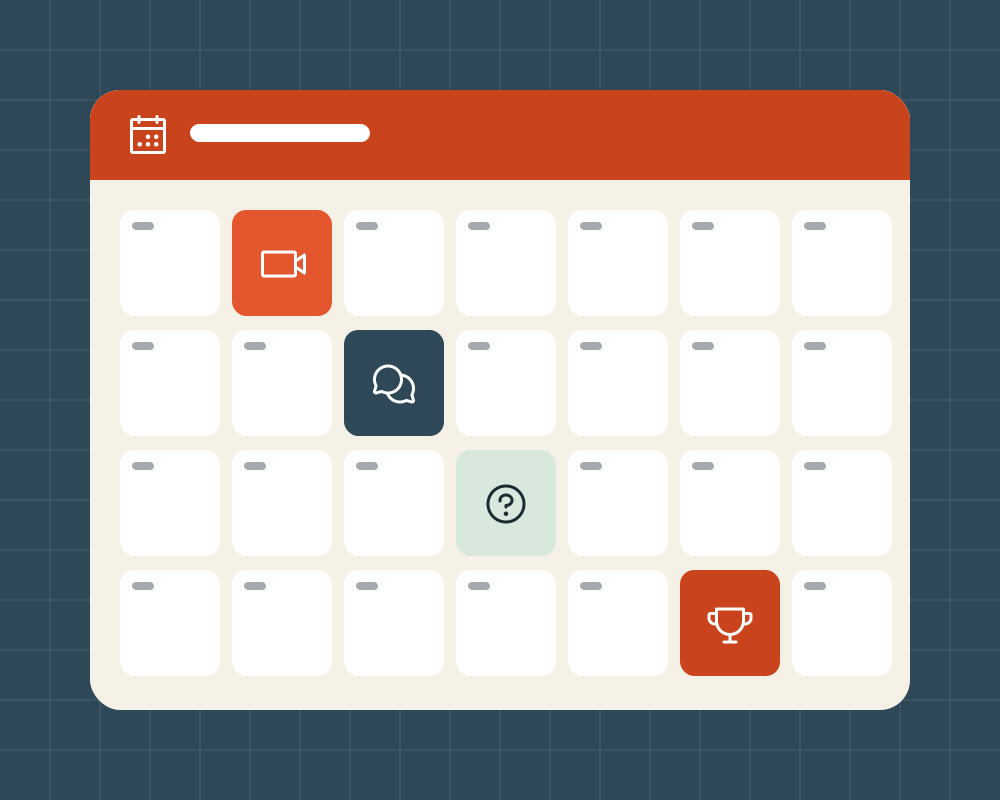
Every course has a week where the work gets harder. In UX Design Foundations it's synthesis, when you sit with twenty pages of notes and have to find the pattern. We now plan that week deliberately: shorter lessons, a worked example, and a live session for members.
Measure the right thing
We track three numbers for every course: how many people finish module one, how many submit the final project, and how many would recommend the course. Completion follows the first two. If module one is weak, nothing later will save it.
If you're planning a course of your own, start with the project, make the first win tiny, and plan the hard week before you record anything. You'll cut more than you expect, and your learners will thank you by finishing.
Sample article and figures, written for the template. Replace them with your own writing.